
Janeau Sanskar
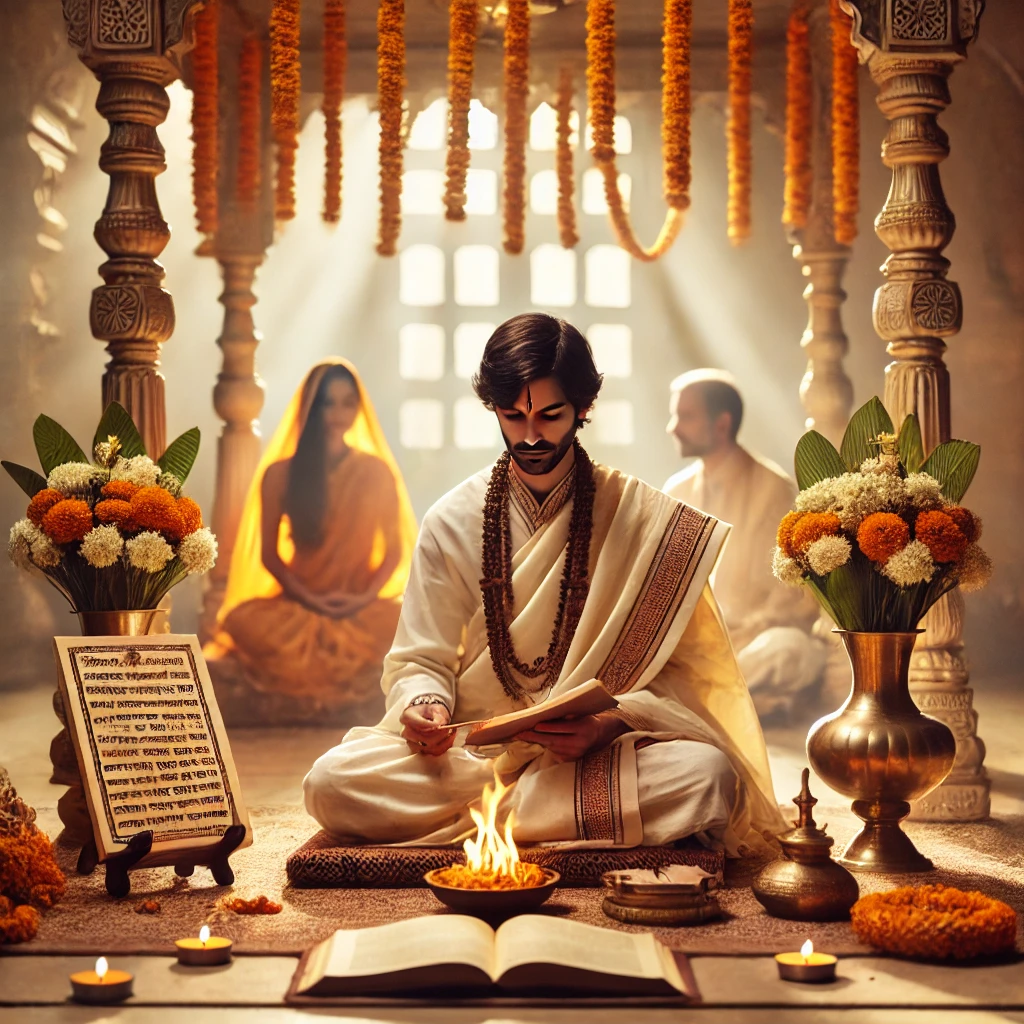
Janeau Sanskar: The Sacred Thread Ceremony in Hindu Tradition
Janeau Sanskar, also known as Upanayan Sanskar, Sacred Thread Ceremony, or Yajnopavita Sanskar, is one of the most important 16 Hindu Sanskars. It is a sacred initiation ritual that symbolizes the spiritual rebirth of a child, usually a boy, into the path of knowledge, discipline, and dharma. Wearing the Janeu (sacred thread) marks the beginning of formal Vedic education and a life dedicated to righteousness.
Meaning of Janeau Sanskar
The word Upanayan means “bringing closer to knowledge and the guru.” The Janeu, or sacred thread, is a three-stranded cotton thread worn across the body from the left shoulder to the right waist. These three strands represent:
Responsibility towards self-discipline
Responsibility towards family and society
Responsibility towards spiritual growth and God
Importance of Janeau Sanskar
Janeau Sanskar is a milestone in Hindu culture, as it:
Marks the beginning of Vedic learning and Gayatri Mantra recitation.
Instills values of self-control, truth, and duty.
Strengthens the bond between guru and shishya (teacher and student).
Prepares the child to take on responsibilities of adulthood.
Purifies the mind, body, and soul for a righteous way of living.
Age and Timing of Janeau Sanskar
Traditionally, the ceremony is performed for boys between the ages of 7 and 16 years, depending on their family tradition and caste system. The auspicious muhurat is determined by a Hindu priest based on the Panchang (Hindu calendar), nakshatra, and family customs.
Rituals of Janeau Sanskar
The Janeau Sanskar Vidhi is performed with devotion and involves several steps:
Ganesh Puja and Havan – Worship of Lord Ganesha and fire ritual for purity.
Mundan (Head Shaving) – Symbolizes detachment from ego and material desires.
Wearing of Janeu – The sacred thread is placed across the boy’s shoulder by the priest.
Gayatri Mantra Initiation – The child is taught the Gayatri Mantra, symbolizing spiritual rebirth.
Begging Ritual (Bhiksha) – The boy asks for alms from relatives, representing humility and detachment.
Blessings from Elders – Family and guests bless the child for wisdom, discipline, and prosperity.
Symbolism of the Janeu (Sacred Thread)
Three Strands – Represent sattva (purity), rajas (activity), and tamas (inertia).
Knots – Symbolize commitment to Brahmacharya (celibacy and discipline) and dharma.
Placement – Wearing it across the body signifies balance between spiritual and worldly duties.
Regional Variations of Janeau Sanskar
In North India, it is widely celebrated with havan, feasts, and family gatherings.
In Maharashtra, it is called Munja or Vratabandh.
In South India, it is known as Upanayanam, often performed with elaborate rituals and chanting.
Conclusion
Janeau Sanskar is not just a ritual but a spiritual awakening for a young boy. It represents discipline, learning, humility, and devotion to God. By wearing the sacred thread and reciting the Gayatri Mantra, the child takes the first step toward leading a righteous and responsible life.
FAQs about Janeau Sanskar
Q1. What is the purpose of Janeau Sanskar?
The purpose is to initiate the child into Vedic education, discipline, and spiritual responsibilities through the wearing of the sacred thread.
Q2. At what age is Janeau Sanskar performed?
It is usually performed between 7 and 16 years of age, depending on family traditions and priest’s guidance.
Q3. Who can perform the Janeau Sanskar?
Traditionally, it is performed for boys from Brahmin, Kshatriya, and Vaishya families, though customs vary in different communities.
Q4. What does the Janeu thread signify?
The three strands of the Janeu represent responsibilities toward self, family, and spirituality, along with the values of purity, action, and discipline.
Q5. Can Janeau Sanskar be performed at home?
Yes, many families perform it at home with the guidance of a priest, while others organize it in temples or community halls.